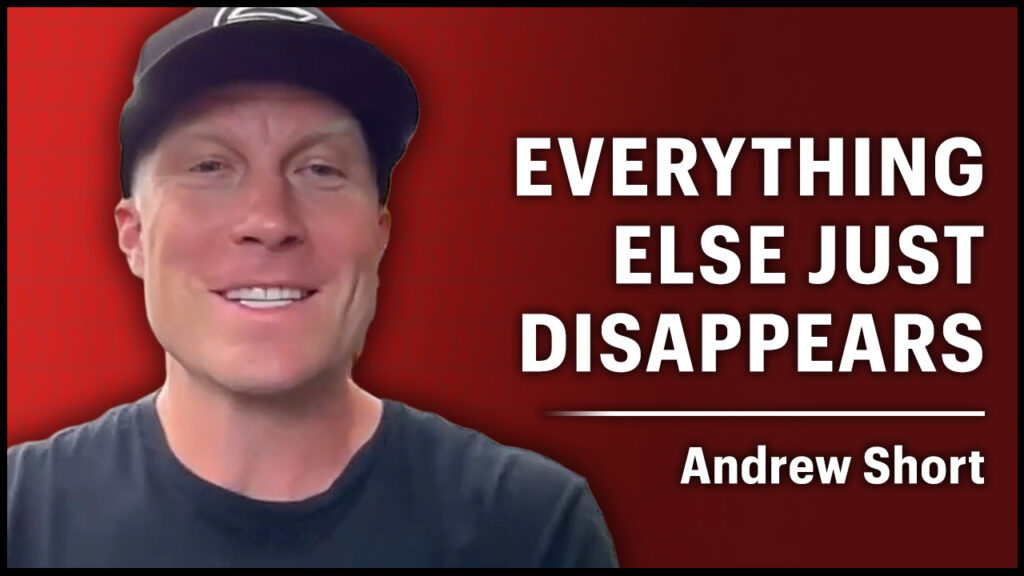
Andrew Short always has a smile on his face. Even when we discussed his “weakness in racing”, we found humor in our situations. That’s what I love about talking with Andrew, he keeps it lite, so there’s very little pressure on himself now that he’s not racing or riding professionally anymore. That’s something I find myself circling back to when I get too deep into the reflection pool of thoughts, dirt bikes are meant to be fun, and if you’re not enjoying the journey, it’s time to revisit the way you’re approaching the situation.
Links to Listen or Watch the April Episode:
What Throttle Therapy Means in Andrew’s Fun Program
When Andrew talks about throttle therapy, he’s describing why dirt bikes still matter so much to him. He says you can show up to an Enduro worried about life, and by the end of the day you can’t even remember what you were stressed about because everything else has escaped your mind. Whether it’s racing Enduro, riding trails or moto, once he is on the bike and focused on what is in front of him, the rest of life gets left at the truck. That feeling of “everything else just disappears” is what keeps him coming back.
The fun program is how he’s reshaped his life after his professional career. He’s no longer obsessed with the details. These days, his version of a healthy lifestyle is simple: eat well, sleep, move his body, ride when he can, hit the gym a couple times a week, and keep enough fitness to enjoy his dirt bike. He just wants to feel good, ride, be a present dad, and let throttle therapy do its work without turning it into another job.
Growth in Rally Navigating with Seth Quintero
Andrew did not stumble into rally navigating by accident. He was already deep in love with rally on the bike side, even wishing he had started that chapter of his career earlier, because it felt like the ultimate blend of Enduro, moto, and adventure. When some friends first asked if he wanted to go to Baja and then to Morocco to navigate for Molly Taylor, he said yes, and that kicked off his move into rally navigating. From there he built experience in side‑by‑sides, went to Dakar with Molly, linked up with fellow Texan Hunter Miller at Can‑Am, and slowly worked his way into more four‑wheel opportunities until the call came from Toyota.
Coming from rally on a bike gave Short a different lens on co‑driving. If you have never navigated before, trying to figure out headings, waypoints, and roadbook notes in a car that is charging across the desert would be nearly impossible. For him, everything “kind of happens in slow motion,” because he spent years doing the same mental math alone on a bike at speed. The big difference now is that he has to get all of that out of his head and into clear words for someone else, in real time, in a machine that is going “a million miles an hour.” On a bike, you absorb your own mistakes; in a rally car with big budgets and a full team behind you, those mistakes land on a lot more shoulders than just yours.
That is part of why navigating for Seth Quintero has pushed him to grow. Seth is a moto kid at heart, grew up in the desert, understands traction, throttle, and braking, and sometimes still has to tell Andrew, “bro, I’m trying” when the notes are coming fast and the car is right on the limit. They have had to build their own language, their own trust, and their own way of talking through self‑talk and problem solving while chasing waypoints and trying to beat the clock. Andrew describes it as being a bit like a coach in the passenger seat, pulling a mental tear‑off when something goes wrong and immediately focusing on what is ahead. It is still racing, still throttle therapy, just with a five‑point harness, a roll cage, and a young driver depending on every word.
Letting Your Kid Love Riding on Their Own
When Andrew talks about parenting, he is very clear that he does not want any of his son’s motivation to come from him. He is not trying to script Hudson’s riding days or force a program on him. If Hudson asks to ride, Andrew will take him, but he is not out there saying “we’re going to do this, this, and this” or trying to manufacture the grind for him. He wants Hudson to connect the dots himself: if you want to get better, that means choosing to put in work, and that choice needs to start inside the kid, not with a parent’s agenda.
He is also realistic about where most moto journeys end up. In his words, 99 percent of kids are not going to reach a level where they are getting paid to ride, much less where they never have to work again. So his goal is not to raise a mini‑pro chasing a contract; it is to raise a kid who still wants to ride a dirt bike when he is older and looks back on this as a good experience, not something he did “because my dad wanted me to.” That is why he values Hudson’s internal motivation so highly and tries to keep pressure low, even while helping him ride a lot, learn, and get better.
Thanks for your time, Andrew
One thing that resonated with me from Andrew was his focus on “living a healthy lifestyle.” I asked him to explain that a bit more because I believe that phrase gets glossed over. Yes, Andrew Short is an amazing athlete and can, and will, always ride a dirt bike fast. But what he explained a healthy lifestyle looks like to him is not anything crazy, yet it keeps him sharp and capable. That is what we should all strive for in life. We do not need to strive to be like Andrew Short, but we should strive for a version of life that keeps us moving, capable, and away from sickness.
0 Comments
Leave A Comment