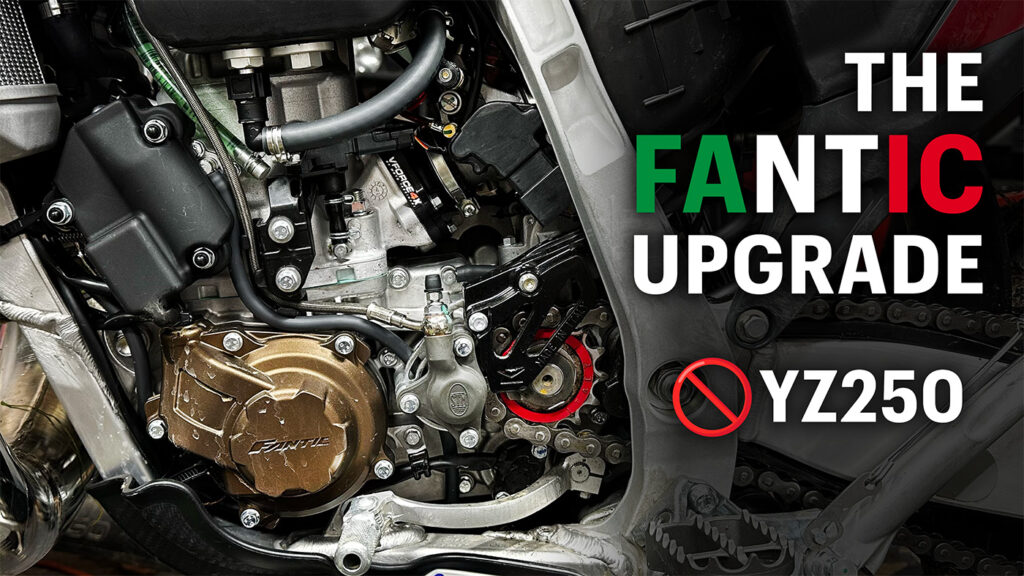
When the opportunity to ride a 2025 Fantic XE300 for a few months came across my inbox, I jumped at the chance. After a year racing the GasGas EX350F at the 2025 National Enduros, my wallet and family needed a break from me traveling. The Fantic two-stroke has been a heck of a fun bike to watch creators and magazines talk about. Of course it all started with Morgan at Highland Cycles who bought and shipped one directly from Europe before they were even available in the States. Now that the Fantics are available in the States, and showing up in dealers, the real down and dirty “should I buy a Fantic” talk can begin.
Who Is Fantic?
If you’re immediately wondering who or what Fantic is, here’s a quick recap. Fantic is an Italian motorcycle brand that’s been around since the late ’60s, with roots in small‑bore enduro, trials, and street machines. In the modern era they’ve leaned hard into off‑road performance, developing their own engines, electronics, and chassis tweaks and proving them in European enduro and rally racing. The bikes they build now, like the XE300, sit firmly in that “purpose‑built off‑road” category rather than being everyday playbikes.
So here I am, being handed a 300cc fuel injected two stroke to ride and make content with. I have no plans to race a full series, but after all the growth I had from racing BJEC in 2024 and ANEC in 2025, it was time to evolve as a rider again. I am going to ride the Fantic bike for fun, but I am also going to race it at a few events. I want to know what it is good at, and what it’s not good at. If it’s great at something, or really bad, we’ll discuss that too. I’m excited to be back on a two stroke again, but more than anything I’m excited to get some seat time. Let’s dig in.
XE300 Setup and First Ride
The Fantic does utilize a well known chassis to house their 300cc Motori Minarelli fuel injected two stroke engine. The aluminium semi-double cradle frame looks familiar, because it is. Fantic Motor has a working deal with Yamaha to utilize pieces and parts of their YZ250 platform. There are many details there that even I am still trying to decipher. Regardless of how and where Yamaha comes into the picture, Fantic has built the bike they want riders to ride. And let me tell you, it’s a bike worth riding.
I didn’t want to adjust too much before my first ride, so I set the sag at roughly 100mm, at the higher end of the 90-100 range noted in the manual. I also moved the levers into a place I thought would be good for my hands. That evolved once I lined up for the Sandwinder Enduro (more on that in the future).
I started at a trail riding pace, noting I hadn’t ridden in three months and that I was on a new bike and a two stroke. Even though I did set the sag, I didn’t adjust the clickers. I wanted to ride the bike into the travel a little bit. Let the oil work its way through everything so it could settle in. What I didn’t expect was a balanced and comfortable feeling from the get go. The GasGas took me 6+ months to get comfortable on, while the XE300 was 5 minutes into the first ride.
The comments on this are funny because everyone wants to say it’s because of the yamaha chassis. You can’t deny that is part of the equation, but the suspension, the motor, and the power delivery are also a huge part of how the bike feels on the trail. As I found my balance points for standing up, I felt myself pushing a little bit harder. As I learned how the suspension would react, I was pushing a little bit harder. As I learned how to feel the power delivery from the engine, I was riding a bit more aggressively. All of a sudden, on the first ride, I was ticking along at a pace I wouldn’t have believed possible, or desired, for a first ride.
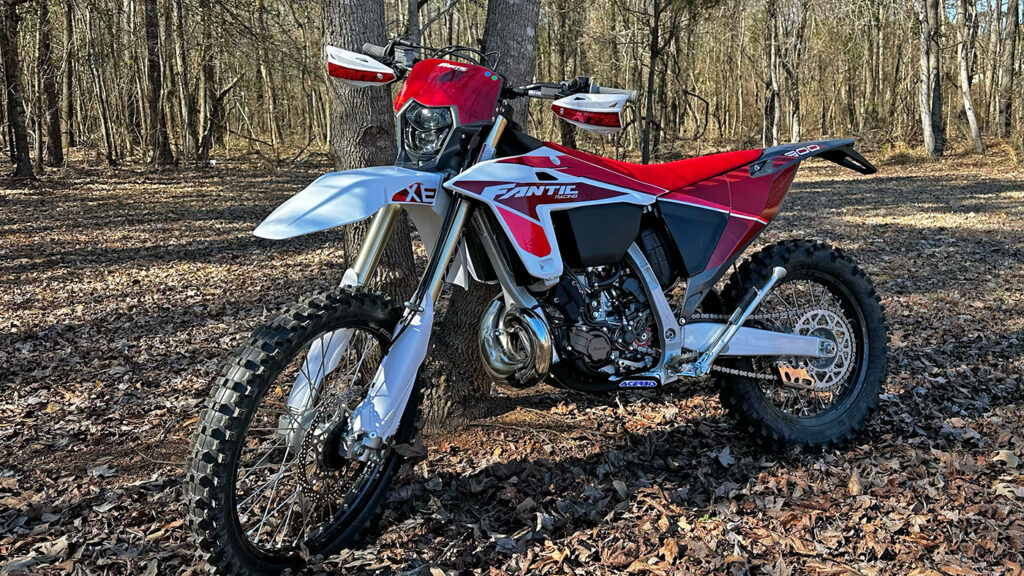
As the day wore on, I got more comfortable on the bike. I started pushing it harder, aggressively hammering into turns to see how it would hold up. I was braking harder than needed to see how it handled aggressive braking. I would hammer on the throttle to see if the fuel injection was responsive to a quick and fast throttle. I also added compression to the forks and shock to begin to see how the feel of the bike would hold up as I charged harder. By the time I drove away from that first day of riding the Fantic, I had an ear-to-ear grin that took awhile to wipe off.
One, it felt AMAZING to be back on a two stroke. Two, the Fantic surprised me. I was able to get back up to speed quickly. The balance this bike has wasn’t something I was expecting to feel. The folks at Fantic have created a very fun, and very responsive, fuel injected two stroke that needs nothing to ride fast and ride aggressively. You can certainly ride the XE300 at a leisurely pace if you desire, but this bike wants you to push and wants you to find the edge.
To find out how much low end grunt the Fantic does, or doesn’t have, I want to take it to Barnwell Mountain. The trails there are some of the hillier ones we have here in North Texas. I’ll be able to see how it reacts as I try to torque my way up and out of different creeks and small hillsides. It’ll also allow me to see how much it’ll wiggle in the tight stuff. I think more preload is needed, to bring the sag a tad lower, so I have more weight on the front wheel. There is always the possibility of bringing the forks up in the triple clamps for more tight singletrack wiggle, but we’ll get there when there’s time.
Can You Build This With a YZ250X?
The quick answer is no. I know everyone wants to say you can buy a YZ250X and bolt on aftermarket this, and aftermarket that, and it’ll still be cheaper. I’m here to tell you this isn’t a YZ250X with added accessories. This is a purpose built Italian dirt bike that has been fine tuned for the off-road enthusiast.
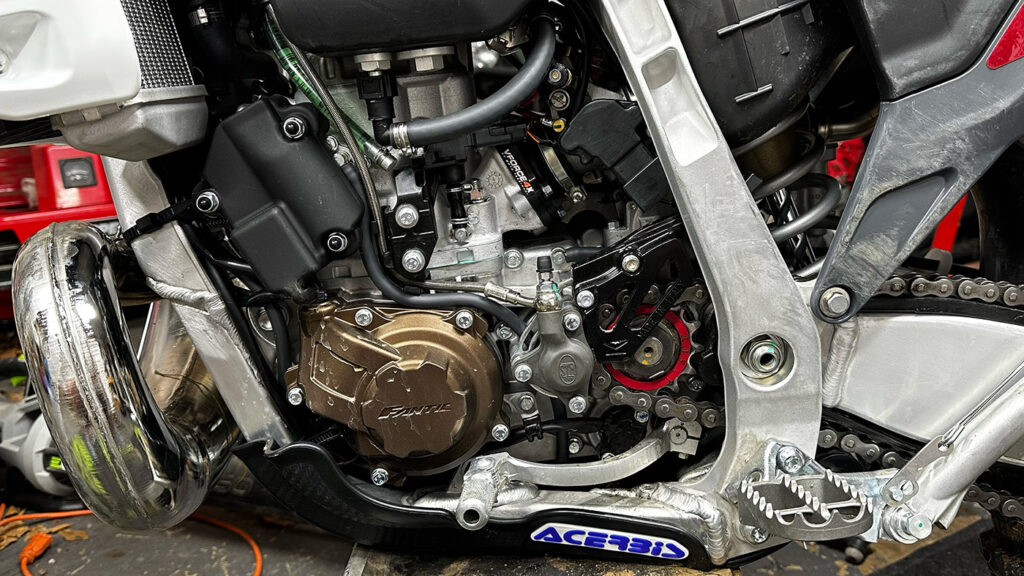
It all starts with the 300cc (292.9 cc) Motori Minarelli engine. It is refined to provide Italian two stroke performance leveraging fuel injection by double injectors and an electronically controlled power valve. Fantic has also provided an electric starter and a hydraulic clutch. Something Cody Webb tried to do, finally realizing it wasn’t possible to have both. Fantic is able to because they built their engine, they didn’t “bolt on parts”.
The map switch allows switching between two very distinct maps for controlling the power of the Fantic. Admittedly, I have been riding it in the green map, map two, which is the softer map. The blue map, or map one, is VERY aggressive. I find it lifts the front end in times where I would prefer it not be off the ground. Until I can have more time learning to control the front end with clutch/throttle control, I have been keeping it in map two. The only hindrance here is it not coming on as much as I would like when really pinning it. The front end is on the ground though, so it’s the choice I’m making for now. I’m sure there will be a way to adjust the maps in the ECU eventually, Fantic USA doesn’t have that ability yet.
All of this adds up to a motorcycle that has been intentionally built for off-road performance.
Price, Value and Next Steps
The current powersports market is weird right now; dealer floors are packed with leftover Austrian bikes and prices are all over the place, which makes the XE300’s $11,599 MSRP look steep at first glance. But that price tag is for a complete, purpose‑built package: a modern fuel‑injected 300 two‑stroke with electric start, hydraulic clutch, mapping, and a balanced chassis that is ready to trail ride or race without another grand in upgrades. After this first ride, and a lot of thinking in the garage (gas fumes included), the Fantic feels less like an aftermarket project and more like a legit long‑term option for off‑road riders and racers.
Since making this video, I have now raced the Fantic at the TSCEC Sandwinder Enduro. I was 28th Overall and 3rd in the 40A class. Subscribe to the Seat Time Youtube channel for that video, and Substack for the article, as we dig in to how the bike, and I, performed.


0 Comments
Leave A Comment