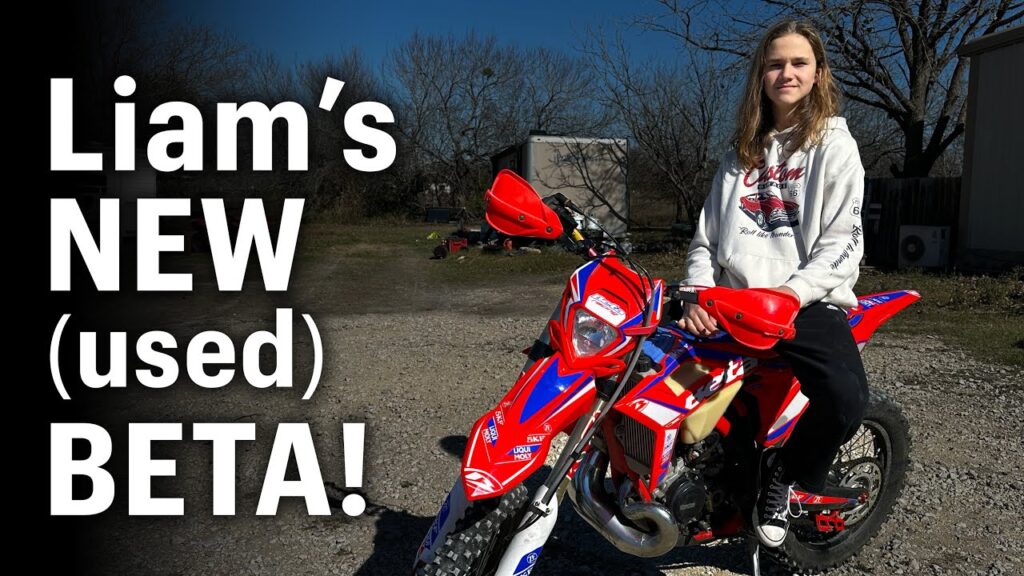
Liam needed a bigger bike. He outgrew his CRF 150F WAY sooner than I thought he would. Due to the height this young man is showcasing, and that he’s probably not done growing, I decided we were going to get on a full size bike. As of right now, he doesn’t want to race, and he has a lot of skill to still learn. This told me a 150 or a 200 two stroke would be perfect for the next few years of us riding together. Yes, a 125 could have been a great option, but I wanted something power wise that he could grow into.
Buying a used dirt bike can be a tough nut to crack sometimes. Not only do local motorcycle dealers have options, but there’s a slew of options on Facebook Marketplace. The shop option is great because you know they’re going to run through the bike, not selling you a lemon, but it’ll also cost more due to the markup they need to make to make the sale worth it. I am also a huge proponent of supporting your local dealers when possible.
Facebook Marketplace is a deep trench of all sorts of buyers and sellers. Knowing I was looking for 150’s and 200’s, my options could be limited. As well, the dirt bike market and ecosystem seems really weird right now. Some are asking crazy prices for used bikes, while others are looking to only get a dollar to open up space in their garage. The messages I have received toward my ‘24 GasGas EX350F have told me most people don’t want to buy dirt bikes right now, or pay a valued price for them. That’s another article entirely.
As the KTM 150’s and Beta 200’s crossed my path, I decided to lean more toward the Beta 200. I wasn’t going to pass up a good deal on a KTM 150, but I was really looking for a used BETA 200. I knew the price we were looking to spend should get us a bike that runs, but that we’ll still need to put some work into it to make it sexy again.
I put feelers out to my Beta riding friends, Bonecutter Offroad, and San Marcos Motorcycles that we were searching for a BETA 200. Phil at San Marcos got back a bit sooner than expected on a 2021 BETA 200 RR that he was selling for $5000. We rounded up the cash after we sold a slew of other bikes and dirt bikes from the garage and drove to San Marcus. After Liam and I both wiped the grins off our faces from riding the 200 around, we knew we were handing over the cash and loading up our first beta motorcycle.
It was while we were driving the 5 hour drive back home that I thought putting together a used dirt bike buyers guide could be a good idea. It would be a way to help others in the same scenario we just went through, and a way for me to learn what others look for in a used dirt bike. This guide certainly isn’t meant to be an exhaustive list, but a place to start as you’re on your used dirt bike buying journey.
Used Dirt Bike Buying Guide: What I Look For
When I’m buying a used dirt bike, the goal is simple: buy a bike we can ride and enjoy, not a project that’s going to sit in the garage half‑torn apart. That mindset drives everything on this list.
1. Make Sure It Actually Runs
The number one rule when you’re looking at a used dirt bike is this: make sure the thing starts, runs, and then ride it around. If it won’t start or you can’t ride it, you’re not buying a dirt bike, you’re buying a project, and that’s a whole different conversation. Fire it up, let it idle, and go for a quick spin so you know it sounds as it should and that there’s nothing loose.
2. Look At How It Breathes In (Airbox & Filter)
Once you know it runs, start thinking about how air moves through the bike. Pull the airbox cover off and remove the air filter. A clean filter is nice, but that alone doesn’t mean they actually took care of the bike. Look down into the airbox and toward the carb or throttle body with a light. If it’s reasonably clean in there, that’s a good sign the owner didn’t spend 80 hours sucking straight dust.
3. Look At How It Breathes Out (Exhaust & Leaks)
Next, check the exhaust where it meets the cylinder or head and where the pipe or slip‑on joins the rest of the system. On a two‑stroke, a little spooge is normal, but big wet, black messes or obvious leaks at the manifold can point to worn O‑rings or jetting that’s way off. That doesn’t mean you walk away, but it does mean you mentally start a parts list and maybe a little negotiation list too. Exhaust and pipe damage let you know how the bike was ridden or treated as well.
4. Don’t Be Fooled By Clean Plastics
Step back and just look at the bike. Is it filthy in all the nooks and crannies, or does it look like it got a pressure‑washer bath right before you showed up? A dirty but honest bike with normal wear on the cases, frame rails, and plastics usually means it’s been ridden like a dirt bike should be. A sparkling clean bike can be fine too, but remember that cleanliness can also be a way to hide leaks, weeping seals, or hastily wiped‑off problems.
5. Spin And Shake Things (Bearings & Linkage)
Wheel bearings are an easy tell. Grab the wheel at 12 o’clock and try to wiggle it back and forth. If there’s noticeable play, you’re buying wheel bearings soon. That’s not a deal breaker, but it’s a “hey man, I’ve got to put parts into this, let’s shave some money off the price” moment.
Then get a hand under the rear wheel or have someone lift the back end a bit and feel for play in the linkage and at the top of the shock. Any clunk or movement there means linkage or shock bearings need replacement. Again, not the end of the world, but every little bit of slop you feel now is future time and money you’re committing to the bike.
6. Chain And Sprockets: Wear You Can See
Look at the chain and both sprockets. A kinked, rusty chain or sprocket teeth that are starting to hook and “shark fin” tell you two things: one, you’ll be doing a chain and sprockets soon, and two, the current owner probably wasn’t on top of basic maintenance. Typically, fronts wear faster than rears, so if the front looks hammered, assume you’re doing the whole set and add that into your mental budget.
7. Brakes: Pads, Pistons, And A Reality Check
Check how much pad material is left. If the caliper piston is sticking out a long way, the pads are nearly done. Worn pads are manageable and easy to replace, but when you start stacking pads, possible rotor wear, and a brake bleed onto everything else you’ve found, it helps you decide if the asking price still makes sense.
8. Add It All Up And Negotiate
As you walk around the bike, you’re basically building a list in your head:
- Wheel bearings or linkage bearings.
- Chain and sprockets.
- Brake pads and a bleed.
- Springs or suspension service if you’re changing the bike for your weight and speed.
- Leaking fork seals – after compressing the forks a few times, look for fresh oil on the fork tubes
- Title/Paperwork – Make sure the VINs match
None of that stuff is sexy, but it all costs money. Knowing what you’re signing up for after you get the bike home is the difference between feeling like you scored a deal and feeling like you got hosed. Use that list to negotiate. If you’re about to spend a few hundred bucks in parts and maybe shop labor, the price should reflect that.
Where We Go From Here
As we work on and ride the Beta, we’ll continue to make content around what we learn. I’m excited to see how Liam evolves as a rider as he gets more time and experience on the 200. As for me, there is no “new to me” bike yet. The GasGas is still for sale, and I’ve lowered the price to $6,000. I can’t go lower than that though because I need the value back from what we’ve spent on it and put into it over time.
What did I miss in the used dirt bike buyers guide? What should we know about Beta’s that we don’t want to learn the hard way? What have you thought about the recent podcast episodes?
Thanks for reading and for riding with us. We’ll see ya for the next one!


0 Comments
Leave A Comment